Misha and I were both raised in mostly secular households and amongst communities that, while being predominantly Christian, varied in their religiosity. Our first tour took us to Isreal, probably the most contentious place in the world in terms of religious significance, yet to the city of Tel Aviv that is fairly secular. For that reason, our exposure to local religious customs was relatively limited.



In Guatemala, the influence of Christianity is everywhere, often strangling Mayan roots in all but the more remote locations in the country. We were able to make an offering at the shrine of the Mayan deity Maximon in our trip to Lake Atitlan, yet all the towns around the lake are named after Christian saints. We witnessed a Mayan ceremony at the ruins of Iximche, yet you drive by multiple churches to get there. It’s not surprising given the manner of the Spanish conquest and the indigenous genocide in Guatemala more recently.
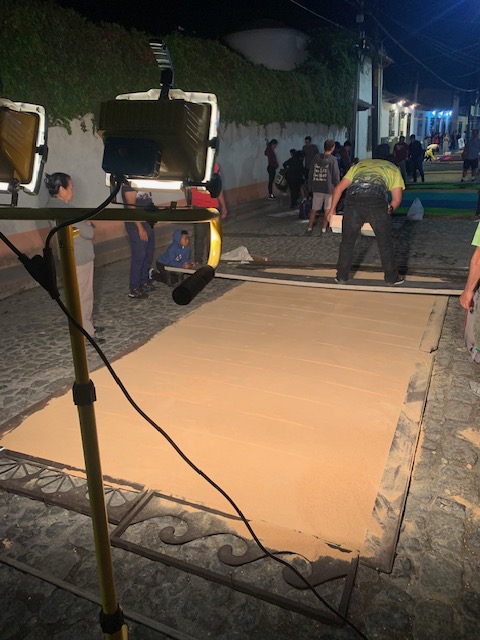


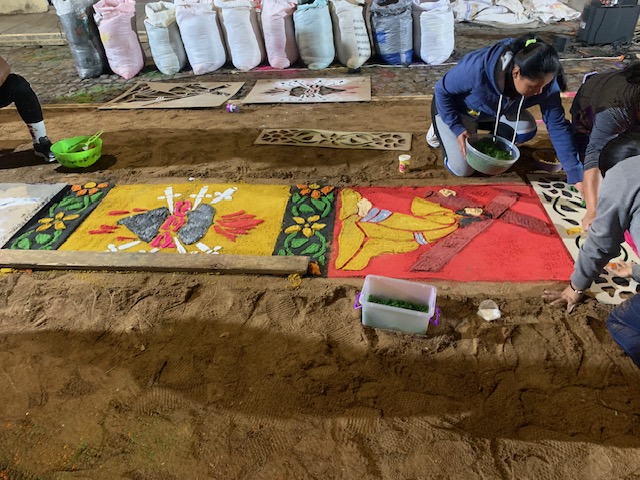

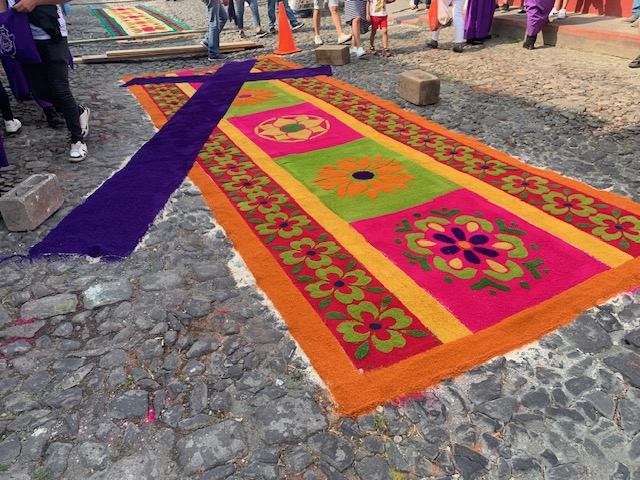
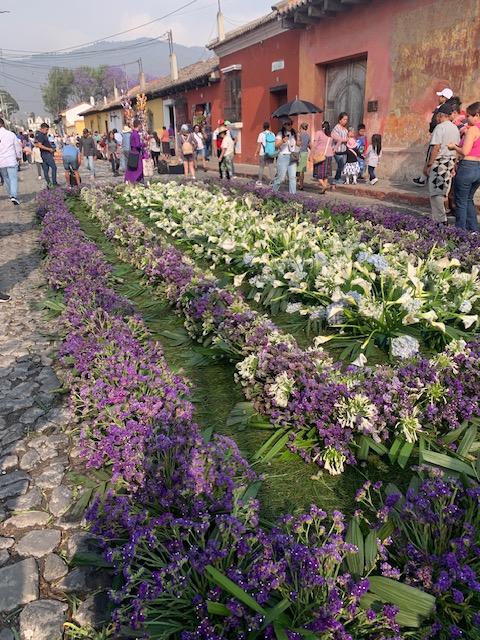


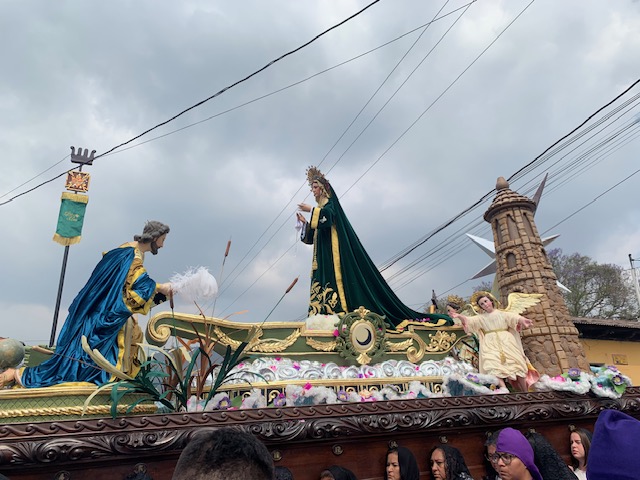
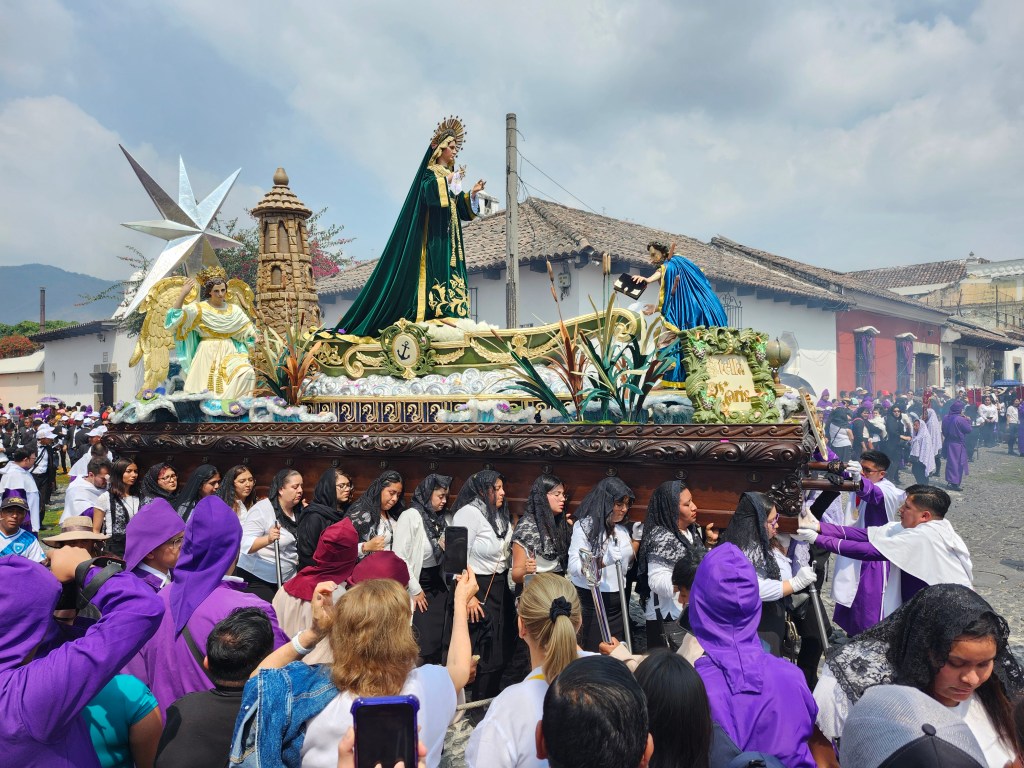
As the country trends toward equilibrium, it has built up some renown for their celebrations leading up to Easter, so much so that UNESCO designated Guatemala’s Holy Week an Intangible Cultural Heritage of Humanity in 2021. For five straight weeks leading into Holy Sunday, you can find processions around the country. The most famous is during Semana Santa, when residents of Antigua build carpets made of dyed sawdust, flowers, scraps of paper, and other materials, called alfombras in Spanish (pictured in various stages of completion above). They spend hours laying them out in intricate patterns and designs along the procession route, only to be trampled and destroyed when thousands of people walk over them carrying massive floats depicting various scenes and characters from the Bible. We decided to go two weeks ahead upon a recommendation from a friend and spent the night before the procession admiring the work it takes to build the alfombras. It’s something anyone spending time in Guatemala during the Easter season needs to see. In addition to the photos in this post, you can also check out some footage here.
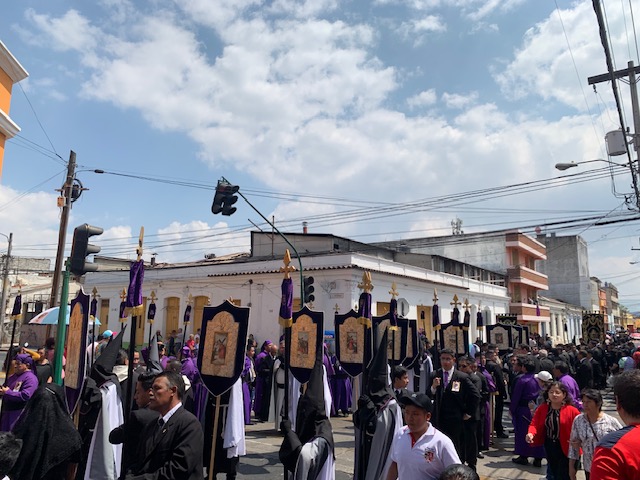
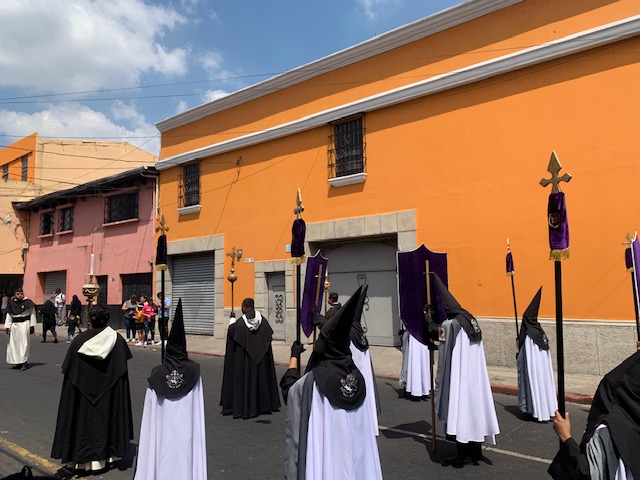
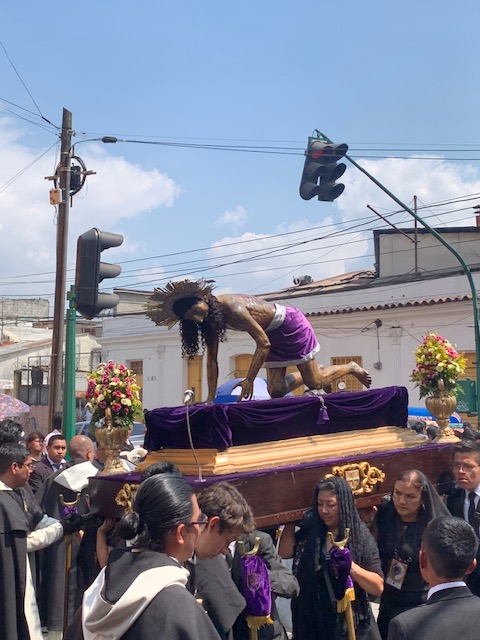

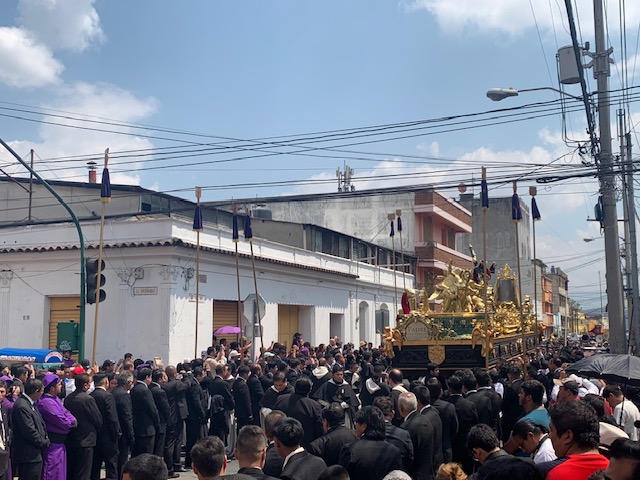

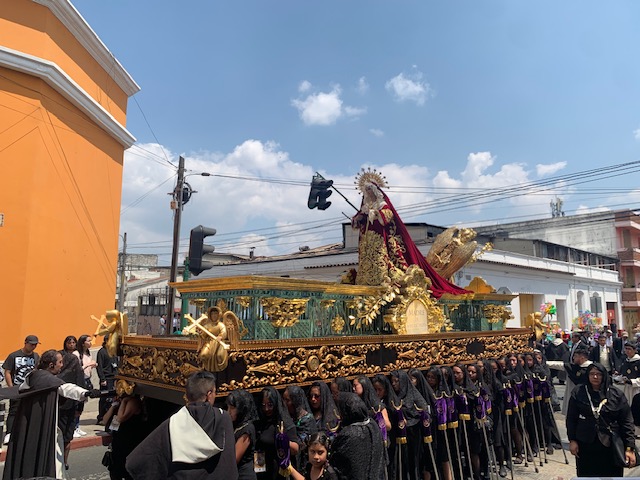


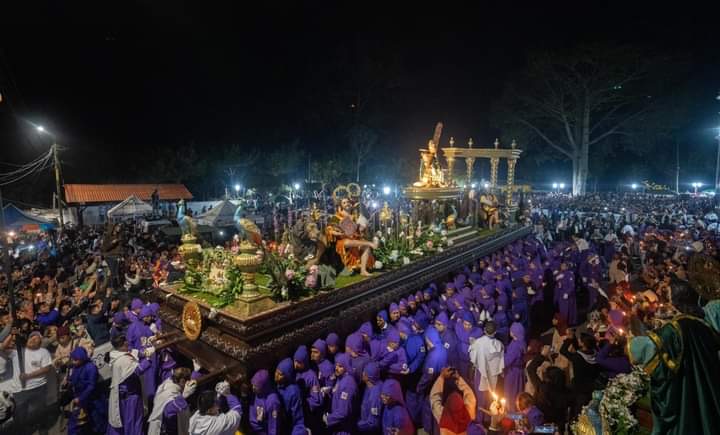
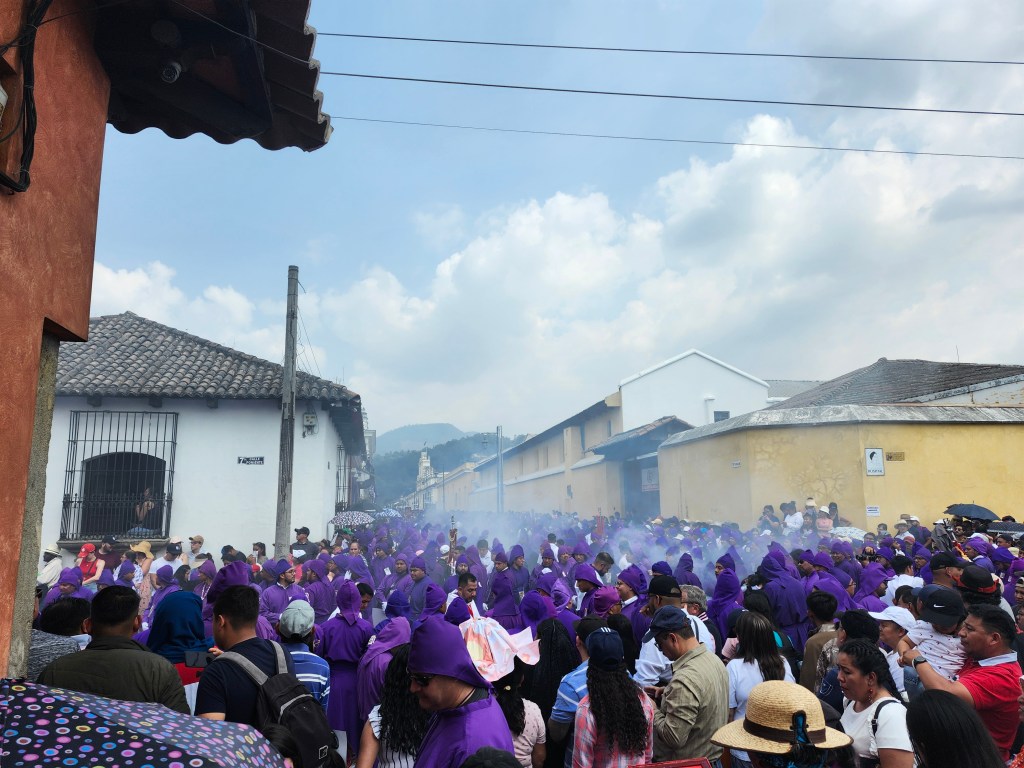
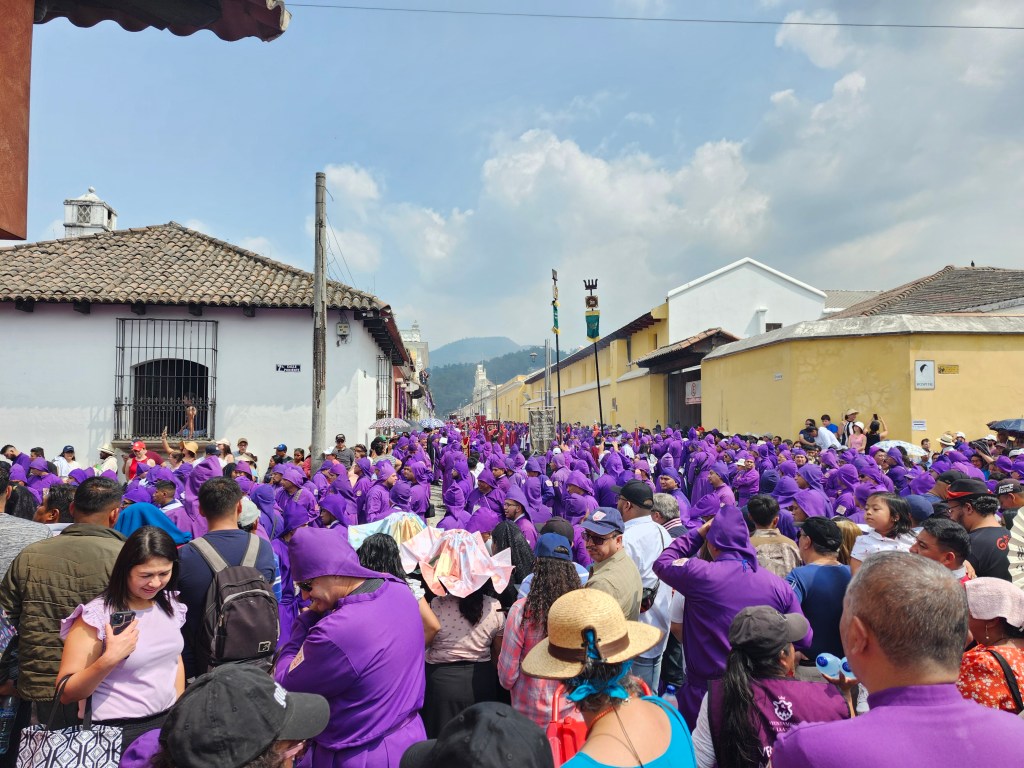
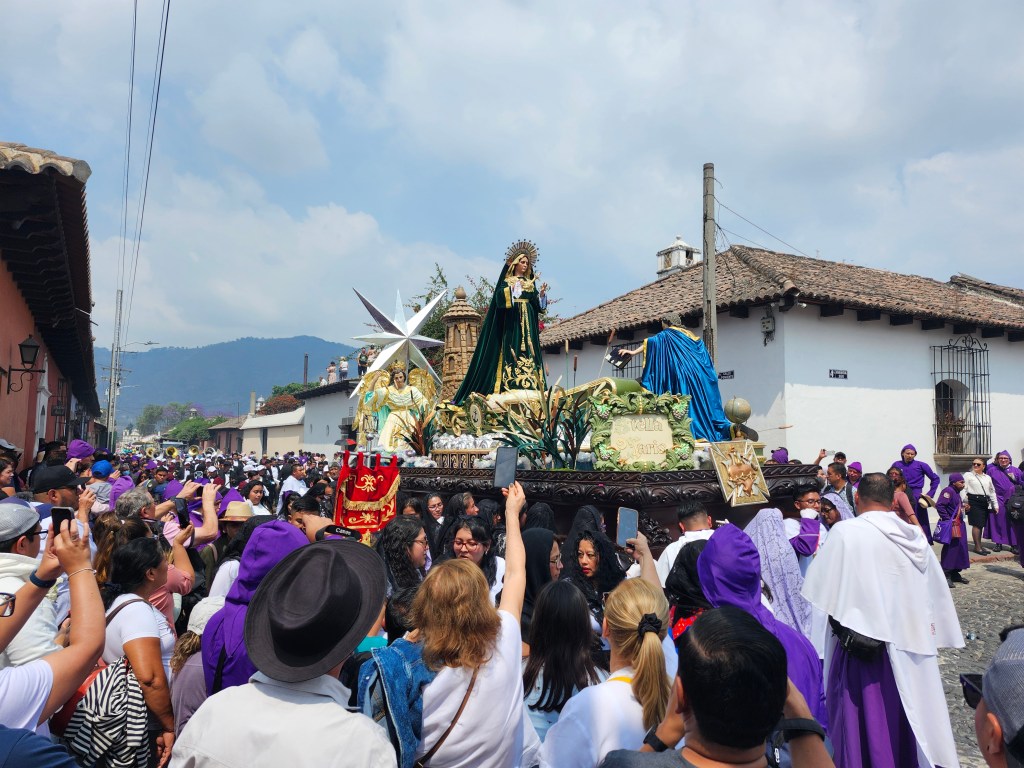
I was also able to go to a procession in Zone 1 of Guatemala City earlier in the season, pictured above. This one had many more attendees and participants but not the alfombras that make Antigua’s ceremonies famous. The first thing that struck me is the outfits, which as an American seemed too similar to purple KKK robes. Moving past the outfits, my local friend explained that every year, the float depicts a different scene, and the choice is somewhat of a surprise. Some images, he explained, were brought from Spain, while others were commissioned by the Spaniards to evangelize to the Mayan populations. For this reason, some images have been venerated or carried in procession for nearly 500 years.


Today, many young people retain the honor of carrying a procession because their parents and grandparents did so in the past. It is also considered a pilgrimage site, and the religious tourism is extremely valuable to the local economy. You can see in the photos that the floats are huge, so people need to rotate out every block or so. I found it funny that there are specially designed tools for pushing up the wires to avoid taking out the electrical grid. Guatemala holds the record for the longest float in the world, belonging to Iglesia el Calvario in Guatemala City. It measures 30 meters long and requires 140 people working in shifts to carry it.
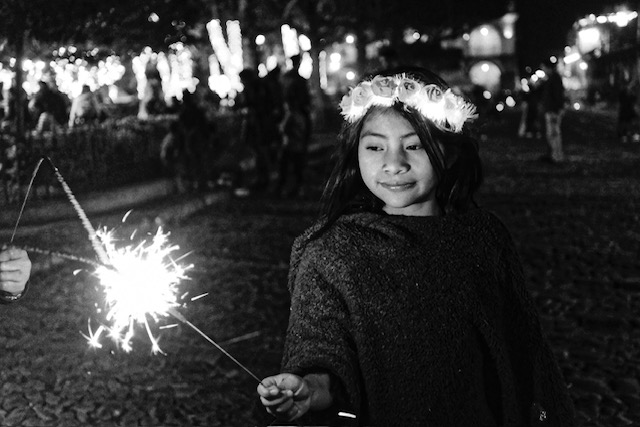
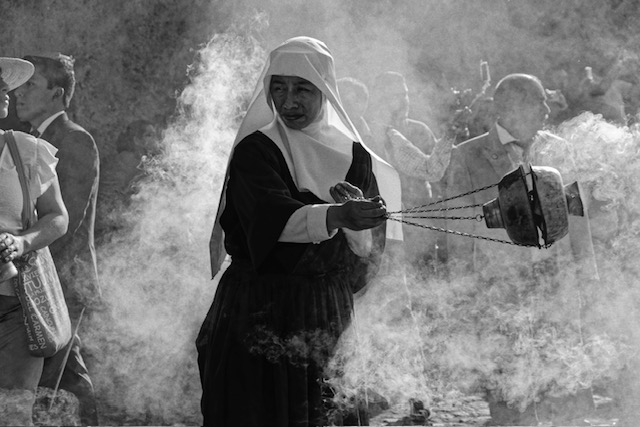
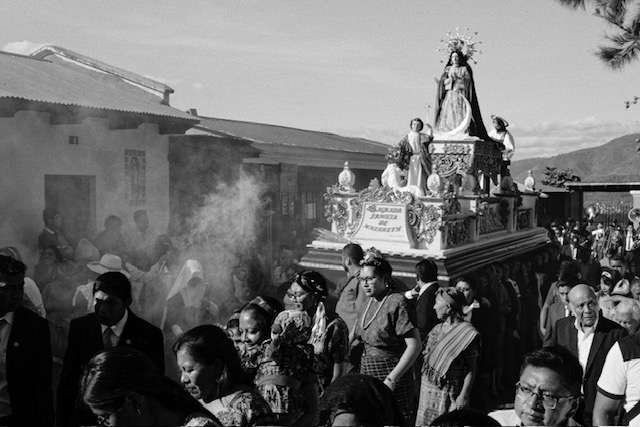


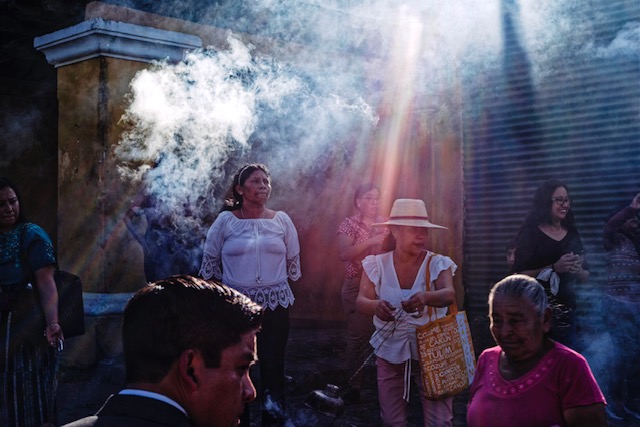
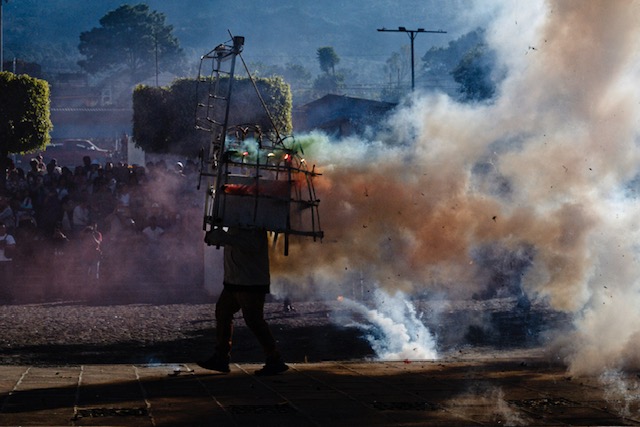
The last procession, which was the first I saw chronologically, was in a small town outside of Antigua called San Juan del Obispo on New Years Eve. This procession was much smaller, a few hundred people at most, but featured the most unique celebration: the torito. Toritos are a small cage worn by what appeared to be mostly teenagers. Tied to it are fireworks and sparklers that whistle and explode while the audience cheer…and sometimes cower from the projectiles. They are called toritos because there is a bull head on the front, which you can see in the pictures above. I’d like to give a special shoutout to my amazingly talented friend, photographer Andrew Tonn, for capturing the moments shown.
It’s been very interesting learning about local customs here in Guatemala. I’m looking forward to learning about those in Vietnam. You don’t last long in this job without having a thirst to learn about the places you visit. Misha and I certainly have that desire and expect it to last until it’s time to retire in 15-20 years. Until then, our travels continue!


 Beer and Diplomacy
Leave a comment